Gold Leaf Gilding: Bringing Luxury and Timeless Detail to Melbourne Homes
There’s a reason that gold leaf never goes out of style. Long before it graced ornate heritage ceilings, it was the finishing touch of choice for anyone wanting a surface that didn’t just look good, it looked unmistakably premium. Today, that same, timeless technique is finding its way into contemporary Melbourne homes, luxury interiors and statement pieces. Whenever someone wants to catch the light and hold it, they’re choosing gold leaf gilding.
For homeowners, designers, and architects working on high-end projects, sourcing a gilder with genuine skill and an eye for detail is essential to getting a result that looks effortless. Walkley Art's Melbourne-based gilding services are the product of decades of hands-on experience across projects of every scale, from luxury resorts and fine homes to heritage landmarks.
In this guide, we'll look at what gold leaf gilding actually involves, why it takes a specialist to get right, where you'll see it used across contemporary and luxury spaces, and what the gilding process looks like from start to finish.
What Is Gold Leaf Gilding?
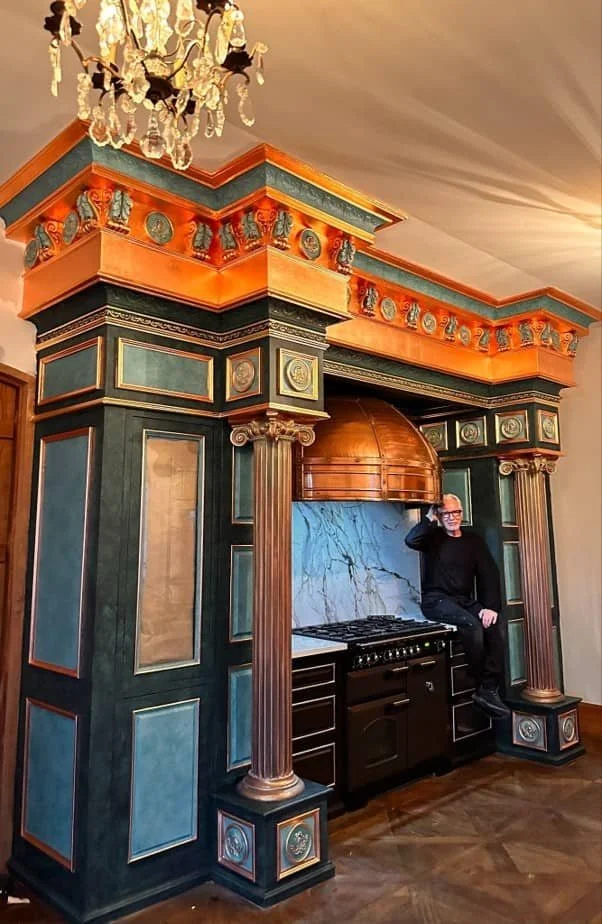
Gold leaf gilding is the traditional craft of applying ultra-thin sheets of hammered gold onto surfaces like wood, plaster, or metal to create a solid gold appearance. Specialists like Walkley Art use these methods to add a luxury finish to everything from statement ceilings and feature walls to fine furniture, signage, and architectural detail, as well as heritage restoration work.
To begin, the surface needs to be clean, smooth, and free of dust and damage. Once it's prepared, a sticky adhesive called "size" is brushed on. For interior work, this is usually water-based; for exterior surfaces, an oil-based size is generally used.
Once the size reaches the right tack, thin sheets of genuine gold are gently laid onto the surface. From there, the gold is brushed clear of excess flakes and polished to a brilliant sheen.
Why Gold Leaf Gilding Needs a Specialist
Gold leaf gilding demands precision, patience, and years of hands-on technique. When you’re applying gold leaf to a new ceiling or a piece of fine furniture, you want trusted hands to do the job. Get it wrong and you end up with visible seams, uneven tone, or a finish that looks flat instead of luminous. Specialists ensure proper surface preparation, the right gilding method for the substrate, and materials that hold up over time without compromising the piece underneath.
Specialists are able to ensure proper surface preparation, match original artisan methods like water or oil gilding, and use materials that weather properly without harming fragile substrates.
Why Expertise Matters
● Flawless Finish: Specialists know how to lay and burnish gold leaf so seams disappear and the surface reads as a single, seamless sheet of gold.
● Substrate Care: Different surfaces, plaster, timber, metal, or fine joinery, need different preparation and sizing to avoid damage or a poor bond.
● Technical Skill: Methods like water gilding and burnishing take a steady hand and years of training to execute to a mirror-like standard.
● Long-Term Durability: Professionals select the correct grade and thickness of gold leaf to withstand everyday wear or environmental exposure, indoors or out.
Genuine gold leaf doesn't tarnish or corrode, which is part of why it remains the finish of choice for anyone after a result that stays brilliant for decades, whether that's a luxury interior feature or a piece of heritage detail.
When Gilded Detail Needs Restoring
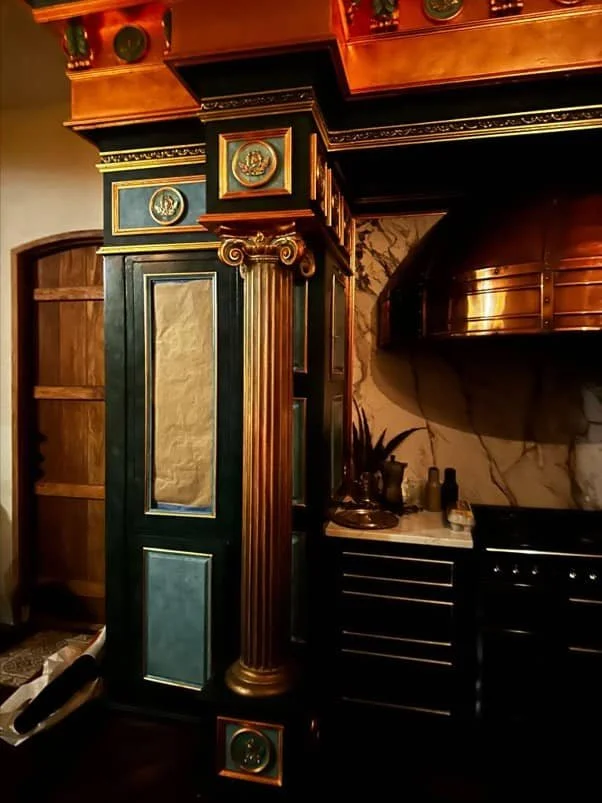
Gold leaf is remarkably durable, but even the best gilding can lose its shine over time. It may be a family heirloom piece of furniture or a luxurious feature piece on the ceiling, when the shine starts to fade, preventing minor wear turning into a full re-gild is a good skill to have.
Here are some of the signs to look for when your gold leaf needs some restoring:
Visual and Material Indicators
● Flaking and Peeling: Gold leaf lifting or curling away from the surface in tiny flakes.
● Fading and Dullness: Loss of metallic shine caused by built-up grime or handling.
● Exposed Substrate: Visible base material showing through worn-away gold leaf.
● Oxidisation and Tarnishing: Discolouration or dark spots on metal-based or oil-gilded exterior details.
● Crazing and Cracking: Fine, spiderweb-like fractures appearing in the protective sizing or sealant layer.
Environmental and Wear Triggers
● Moisture Ingress: Water staining or bubbling around gilded surfaces exposed to leaks or humidity.
● Biological Growth: Mould, mildew, or algae taking hold in micro-cracks on exterior gilded surfaces.
● Pollution and Grime Build-up: Particulate crusts settling into the microscopic thickness of traditional 23-karat leaf.
● General Wear: High-touch or high-traffic gilded pieces, like furniture or fixtures, showing gradual dulling from everyday use.
Spotting these issues early, and bringing in a specialist to address them, helps protect the finish and the piece underneath, whatever the setting.
The Restoration Process
It doesn’t matter if you’re needing gold leaf restores on a fine piece of furniture that is always indoors, or the outside detailing on a heritage home, the same core stages apply for a restoration: surface preparation, adhesive application, and laying the leaf. Master gilder Marcus Walkley brings this process to every project, from private luxury homes and hotels to landmark restorations like the Arts Centre Melbourne State Theatre.
● Surface Preparation: Cleaning the substrate completely and repairing any structural details or moulding so the base is smooth and ready to gild.
● Applying Size: Brushing on specialised adhesive or oil size and waiting until it reaches the correct tack, known as the "whistling" stage.
● Laying Gold Leaf: Transferring ultra-thin sheets of genuine gold onto the surface with precise, overlapping placement.
Pressing and Polishing: Gently smoothing the gold with soft mops or cotton, then burnishing or sealing it to lock in a durable, long-lasting shine.
Why Choose Walkley Art
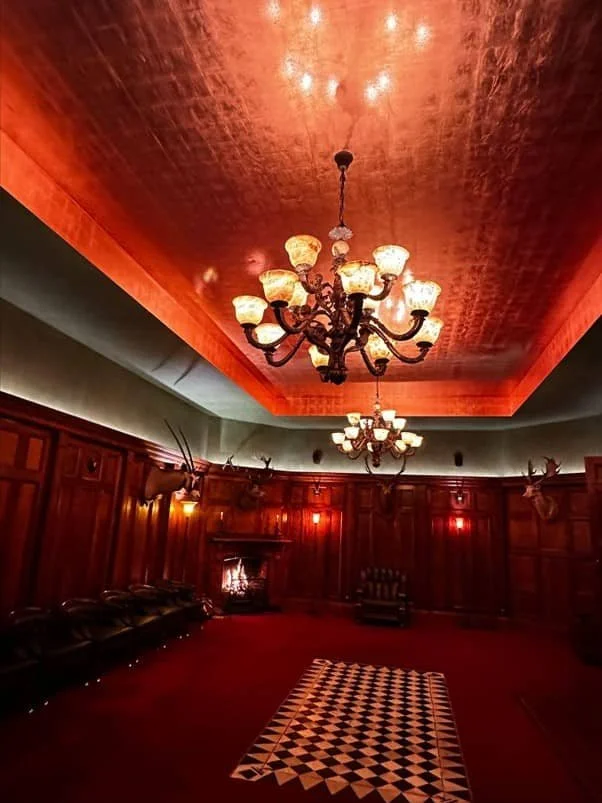
With over 35 years' experience delivering luxury gold gilding across Melbourne, including work for luxury resorts, hotels, and fine homes, Marcus Walkley brings a rare depth of skill to every project. Trained in fine arts, his approach treats each piece, whether it's a statement ceiling, a single gilded fixture, or a heritage restoration, with the same meticulous attention to detail.
That same rigour extends to complex, high-profile work. On projects like the Arts Centre Melbourne's State Theatre, Walkley Art's process has involved thorough on-site appraisals, detailed documentation, and close collaboration with architects and heritage bodies where required, ensuring every surface is treated appropriately rather than simply redone. It's this understanding of substrate, technique, and finish that carries through to every gilding project, contemporary or classic.
Having worked with leading architects and decorators across Melbourne and internationally, Walkley Art combines technical mastery with genuine craftsmanship, delivering a result that looks effortless, however demanding the brief. For gold leaf gilding services in Melbourne, or to find out more about the process, make an enquiry today.
FAQs
1. What is gold leaf gilding?
Gold leaf gilding is the process of applying extremely thin sheets of gold to a surface to create a lustrous, reflective finish. Unlike gold paint, genuine gold leaf never dulls, fades or yellows over time.
2. How thin is gold leaf?
Gold leaf is typically beaten down to a thickness of around 0.1 microns, thinner than a human hair. This is what allows it to conform so precisely to detailed surfaces like carved cornices or ornate lettering.
3. What's the difference between water gilding and oil gilding?
Water gilding is the traditional technique, generally used for fine detail work like frames and interior plasterwork, producing a burnished, mirror-like finish. Oil gilding uses an adhesive suited to smaller interior surfaces and exterior work exposed to the elements, offering strong durability.
4. Can gold leaf gilding be used in modern or contemporary spaces?
Absolutely. Gold leaf isn't limited to period detail, it's just as at home on a contemporary feature ceiling, a piece of statement furniture, or luxury joinery as it is on a heritage cornice. The technique adapts to the surface and the brief, not the era of the building.
5. Why does gold leaf gilding require a specialist rather than a general painter or decorator?
Achieving a seamless, professional finish takes years of hands-on skill, precise surface preparation, and an understanding of how different substrates and gilding methods interact. A specialist gilder ensures the result looks flawless and lasts, whether it's a new luxury build or an existing piece needing expert attention.
6. What materials besides gold are used in gilding?
Silver leaf, copper leaf and other metal leafs are also common, each offering a different tone and finish. Silver leaf is often chemically treated to achieve various colour effects.