
Furniture Gilding: Restoring and Re-Gilding an Antique Piece
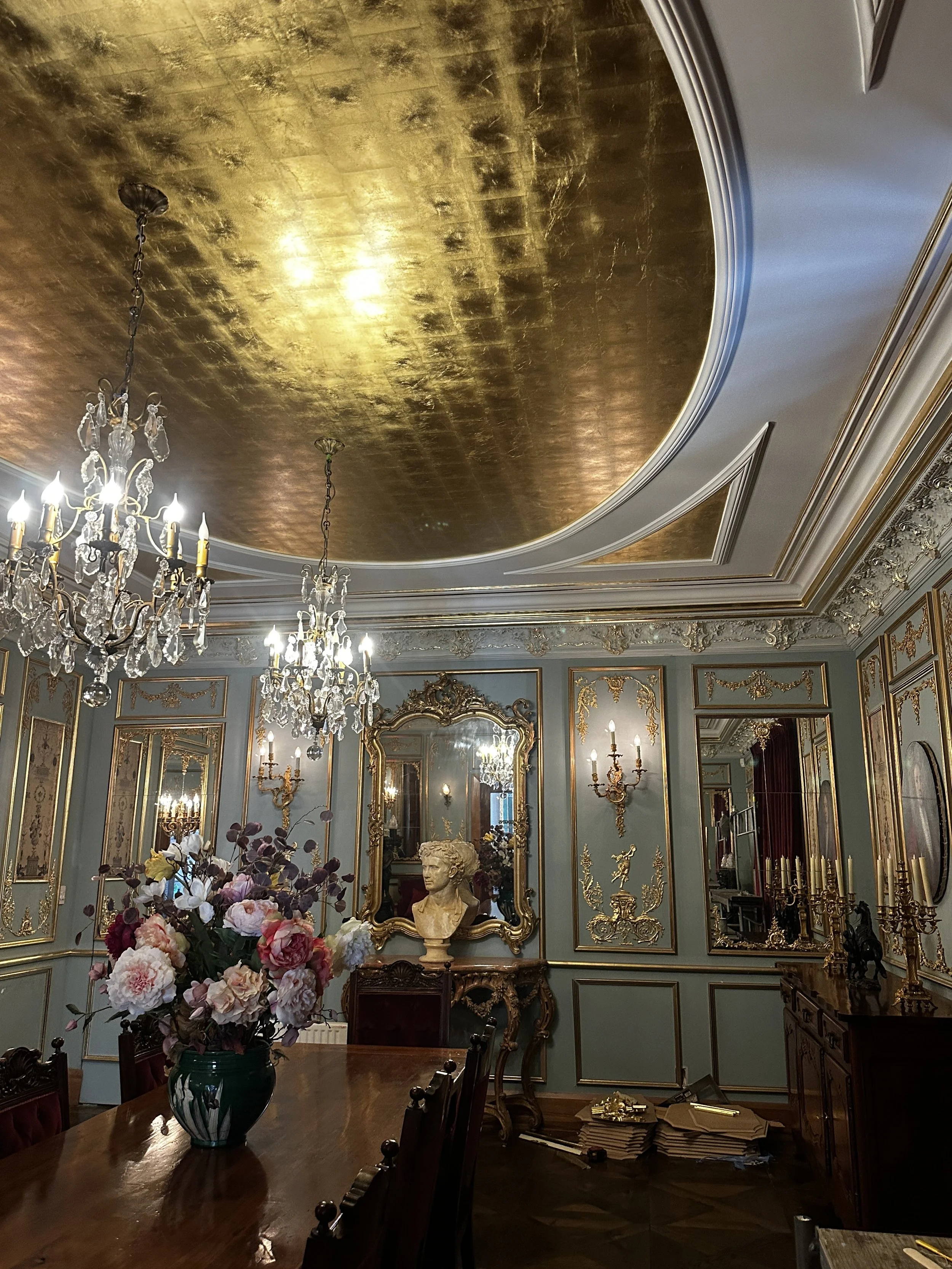
Most of what makes an antique worth having is already on it. That is the difficulty with a gilded piece: take the old surface back to bare timber and the thing you were protecting leaves with it. I am Marcus Walkley, and furniture gilding has been my trade for 36 years, in gold, silver and copper leaf. Frames, mirrors, chairs, consoles, cabinets, and the water gilded gold antique mirrors I have restored rather than remade. Nearly every decision on a piece like yours is made before a hand goes near it.
Our Services
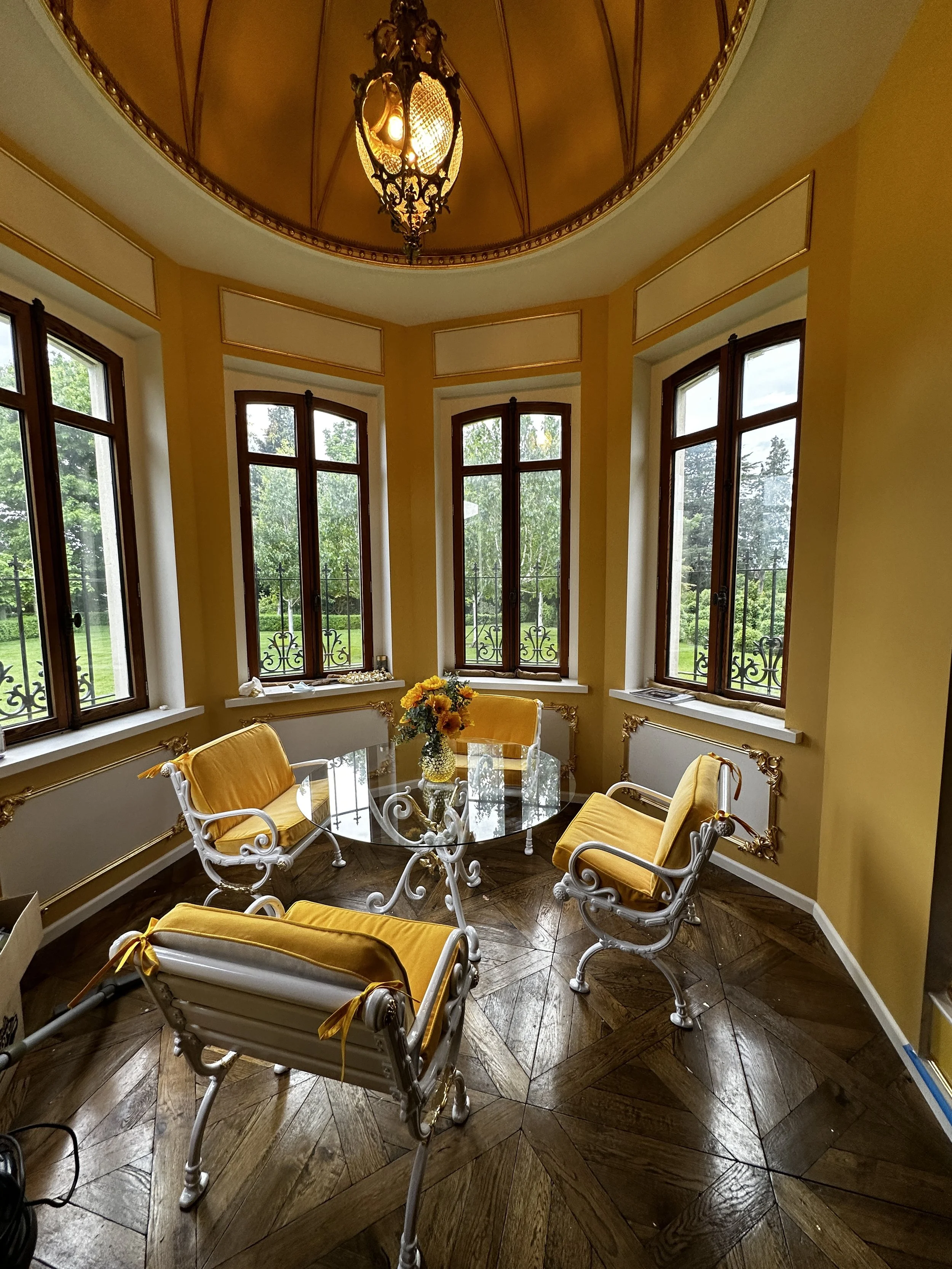

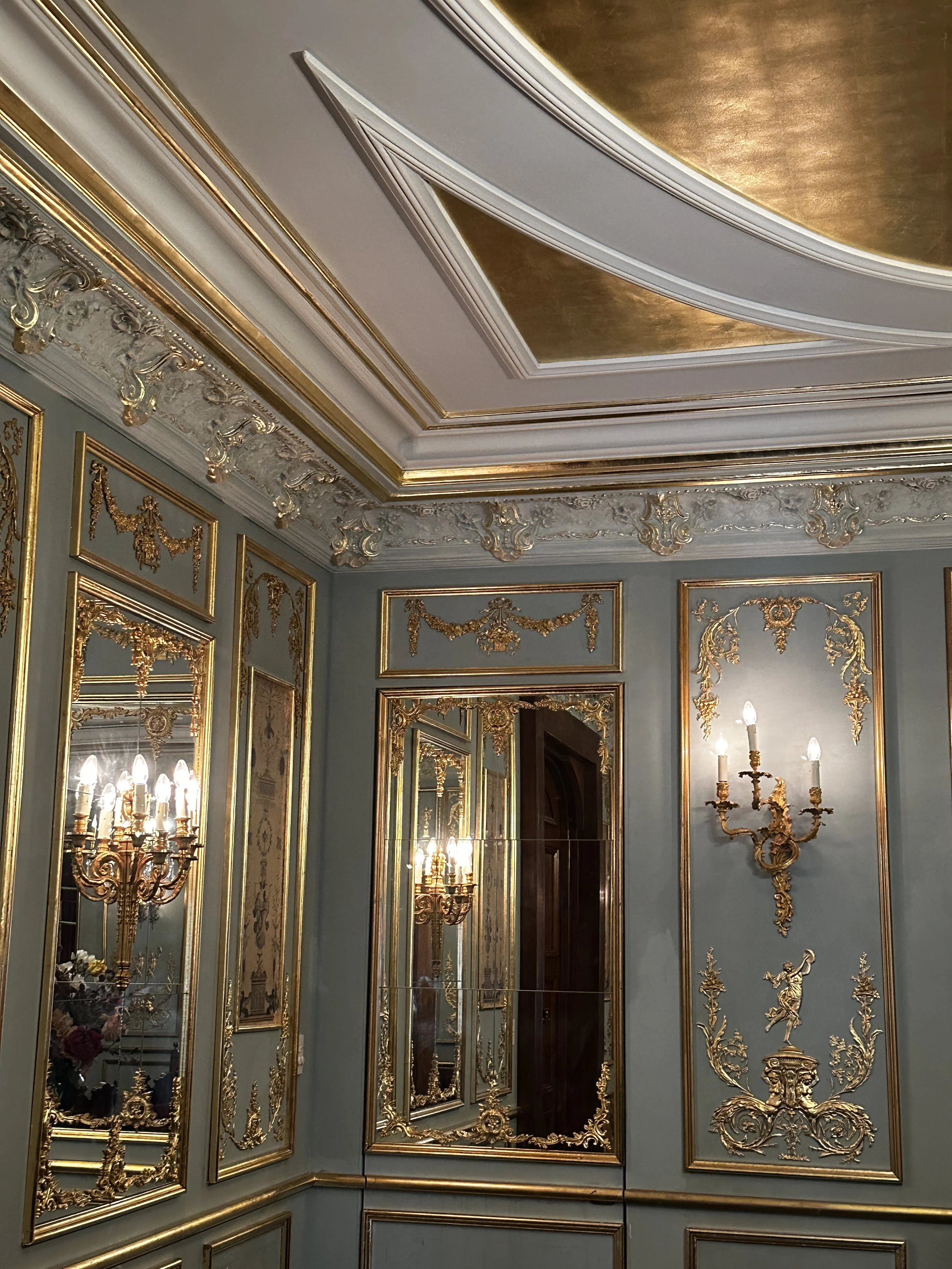
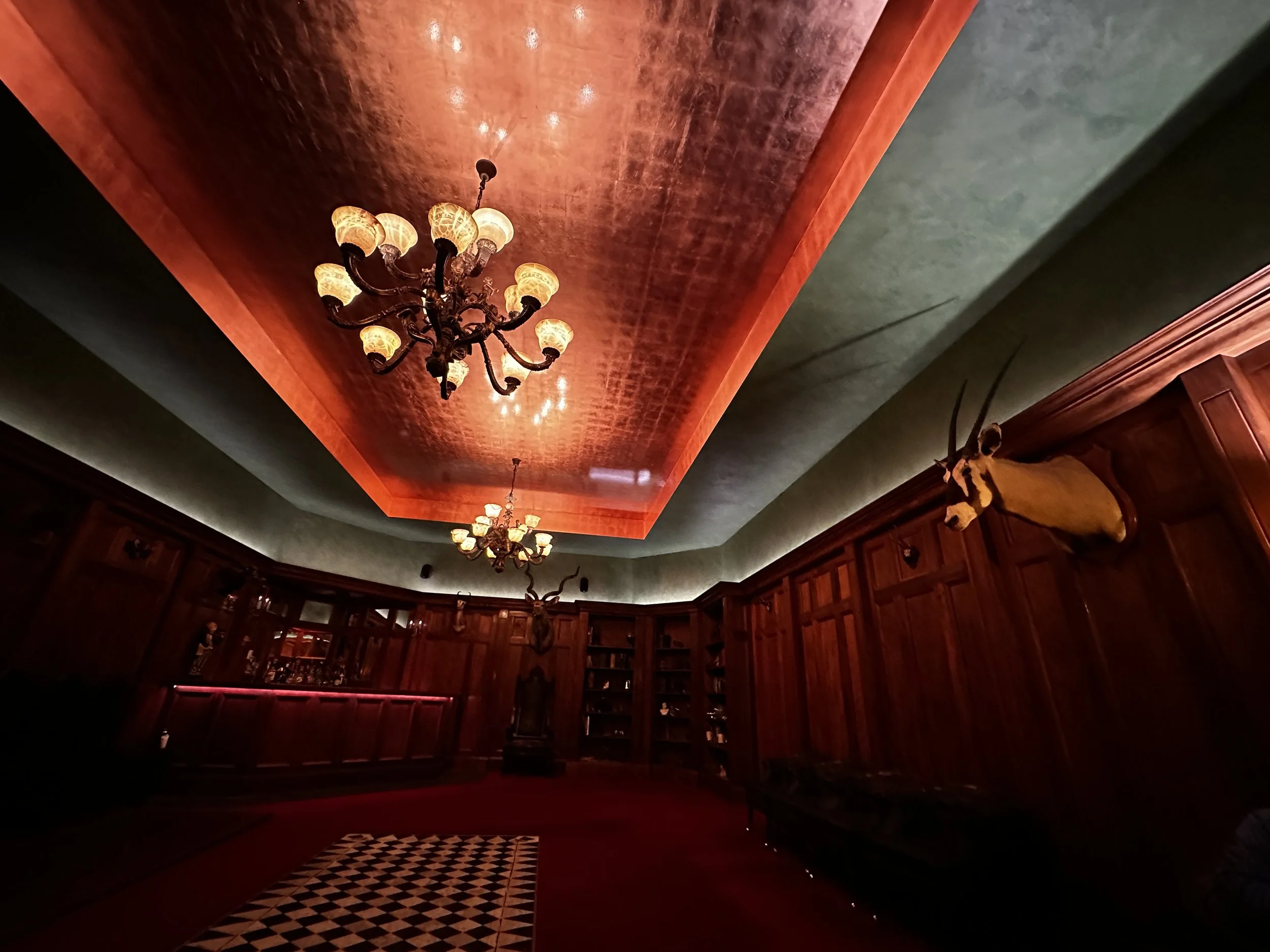

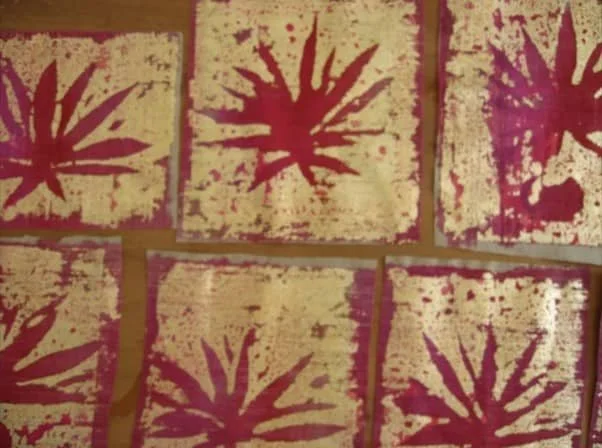
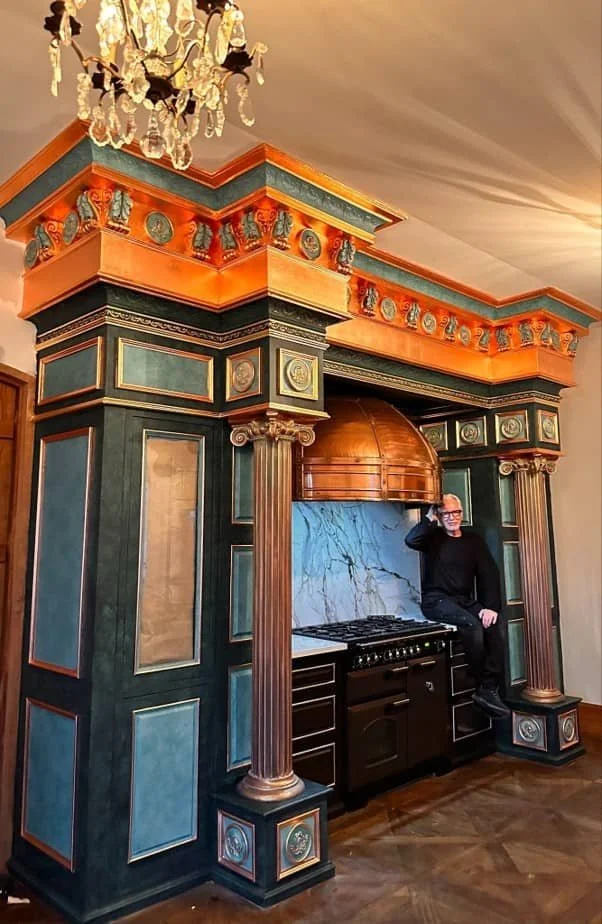

Re-gilding an antique, or restoring what is left of it
Re-gilding lays new leaf onto the piece. Restoration keeps as much of the original as can be kept, and makes good only what has failed. Both are honest work. Choosing the wrong one is the kind of mistake that does not come back.
An original gilded surface carries part of the piece's value in it. Antique gilding was never even: it wore thin where hands and sleeves passed, it stayed dark where the light never reached, and that unevenness is much of what your eye reads as age. Lay fresh leaf across all of it and the piece comes back bright, whole, and younger than it was.
So antique furniture restoration is mostly a sequence of decisions about how little to do. Which losses are stable and can be left alone. Which are lifting and have to be secured before they travel. Whether a small area of new gilding can be brought to sit quietly beside the old, or whether matching one panel will make every other panel look tired.
The more ornate the furniture, the longer that takes, because a carved surface has to be read detail by detail rather than at a glance. Where a piece has been over-restored already, or the original has gone past saving, full furniture restoration and re-gilding is the right answer and I will say so. In a luxury home or on a dealer's floor, the work is judged on how little of the original had to go.

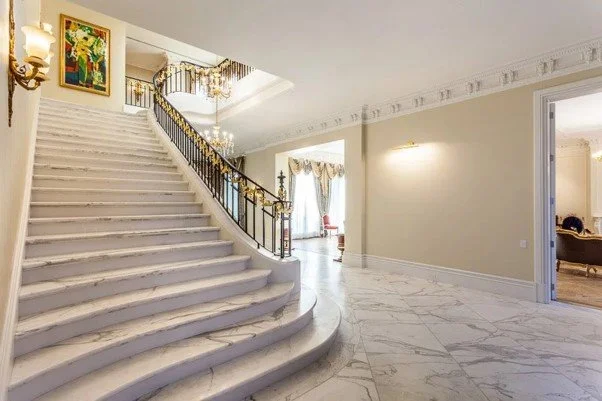
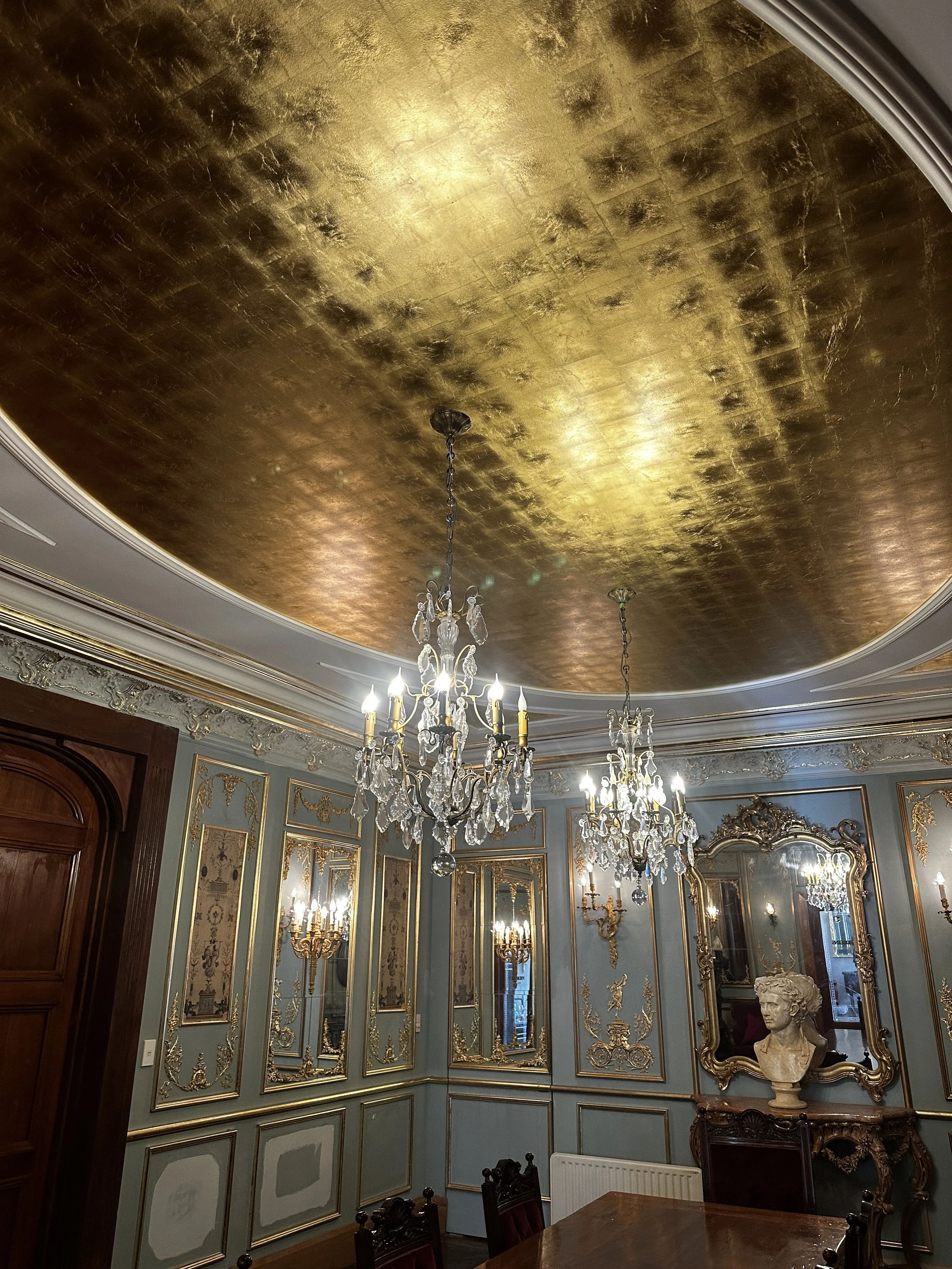
Gilding wax, kits and what they will and will not do
Plenty of furniture suits a wax or a kit, and it is worth being honest about which. If the piece is a reproduction, a flat-pack cabinet, a market find you would not miss, or something bought expressly to learn on, have a go at it. Wax worked into a moulding lifts the carving, it can look very good, and nothing irreplaceable is at risk if it goes wrong.
What those products cannot do is behave like leaf. Gold leaf on furniture is the metal itself, laid sheet by sheet onto a prepared surface. Wax is a colour on top of the surface; leaf becomes the surface. Held to the light, the two are not close.
So should you attempt it on the antique? The line worth drawing is not between amateur and professional. It is between what can be undone and what cannot. Dusting, careful cleaning, a wax on a piece with no original gilding left: all recoverable. Sanding a carved edge is not, and an old surface stripped or scrubbed back is gone, along with the part of the piece's value that lived in it.
If you would rather learn this properly than improvise on something precious, I run gilding classes for beginners and for working artists. Teaching it is part of why I can tell you which jobs are worth attempting.
Frames, Mirrors, Chairs and The Metal Already On Them
Your piece is most likely a frame. Mirrors first, then pictures. After them come chairs and settees with gilded show-wood, consoles, cabinets, bedheads and screens, and single carved elements that have come away from something larger.
On an antique the metal is rarely a free choice. Whatever is under the dirt decides it, and the job is to match rather than select. On contemporary pieces you can choose. Silver leaf on furniture cools the piece down where gold warms it, and copper reads closest to the timber underneath. My furniture portfolio shows how each behaves once it is on and lit.
Not everything I do to furniture is gilding. Custom painted and decorative finishes on furniture run well past leaf. Some of the most useful jobs are the smallest: softening a chrome frame into a champagne tone, say, so it stops fighting the brass and timber already in the room. That is a tonal adjustment rather than a restoration, and a shorter conversation than an antique ever is.
Where The Timber Work Stops and The Gilding Starts
Two trades meet on an old piece of furniture, and it helps to know which one you are ringing.
Timber furniture restoration, in the sense of re-gluing joints, replacing a broken leg or patching lifted veneer, is a cabinetmaker's craft and not mine. Nor do I offer general furniture refinishing: stripping a timber surface back and recoating it is somebody else's trade. What I take on is the decorated surface, the layer that reads as gold or silver, and its repair. Where a piece needs both, the structural work goes first, because anything I lay down needs the surface beneath it sound.
Tell me in your first message what is wrong structurally as well as visually, and you will know quickly whether I am the first call or the second.
The Training Behind a Walkley Art Restoration
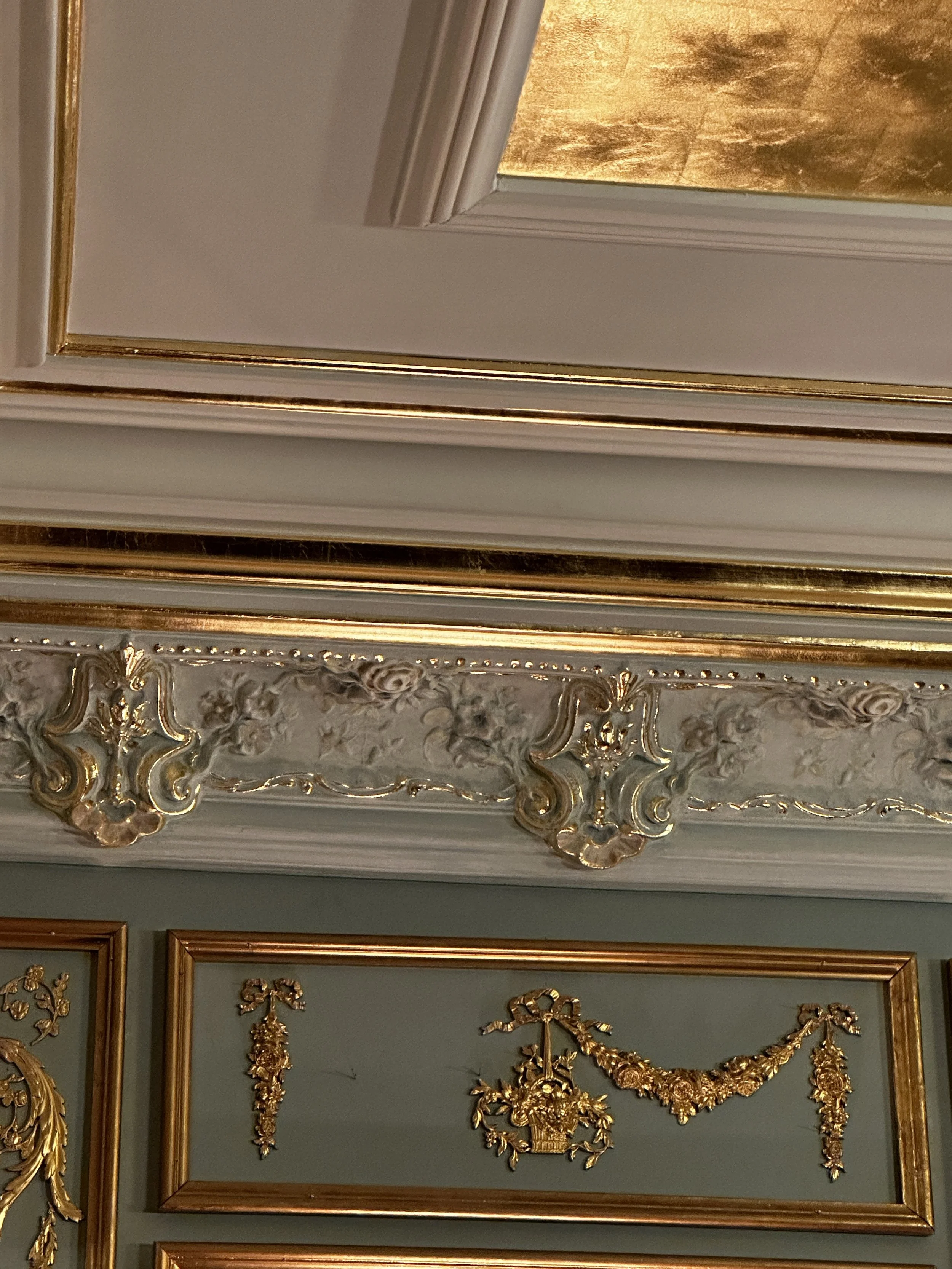
Furniture gilding and restoration has been part of Walkley Art from the beginning, alongside the ceilings and the walls, and I have been at it for 36 years.
I came to the work as an artist first: a Diploma of Fine Art at Prahran Technical College, then postgraduate study in Fine Art at the Victorian College of the Arts. The gilding I learned from Jennifer Bennell at the Studio of Painted Finishes in Sydney, and I am a member of the Society of Gilders. Water gilding, the classical method behind a great deal of the antique gilding that survives, takes longest to learn and shows first when it has not been.
A dealer is a demanding judge of this work. Lily Geddes of Graham Geddes Antiques and Antiquities wrote: "We were fortunate and privileged to have Marcus and his team onsite at our 899 High street, Armadale shop". That work was done in their own shop rather than carried out of it. Other clients have had their say on the testimonials page.
My studio is in Elwood and I travel to the piece. Where the work is done gets settled once I have seen it, rather than promised in advance. Guarantees and warranties cover both materials and workmanship, and the leaf comes from suppliers worldwide with my guarantee of no child labour in its production.

Photograph the Piece Before Anything Else
Photographs are enough to start. Take them in daylight, far enough back to show the whole piece, then close in on the parts you would rather not send: the flaking, the losses, the corner where an earlier repair has gone its own way. The damage is the useful information. The sound sections tell me very little.
What no photograph will tell either of us is how much can be saved. That gets decided with the piece in front of me. Anyone willing to promise you an outcome from a description alone is guessing, and on something you cannot replace, a guess is worth nothing.
Photographs go to marcus@walkleyart.com. If you would rather talk it through first, the number is +61 411 622 711, Monday to Friday.

Contact us
Interested in working together? Fill out some info and we will be in touch shortly. We can’t wait to hear from you!