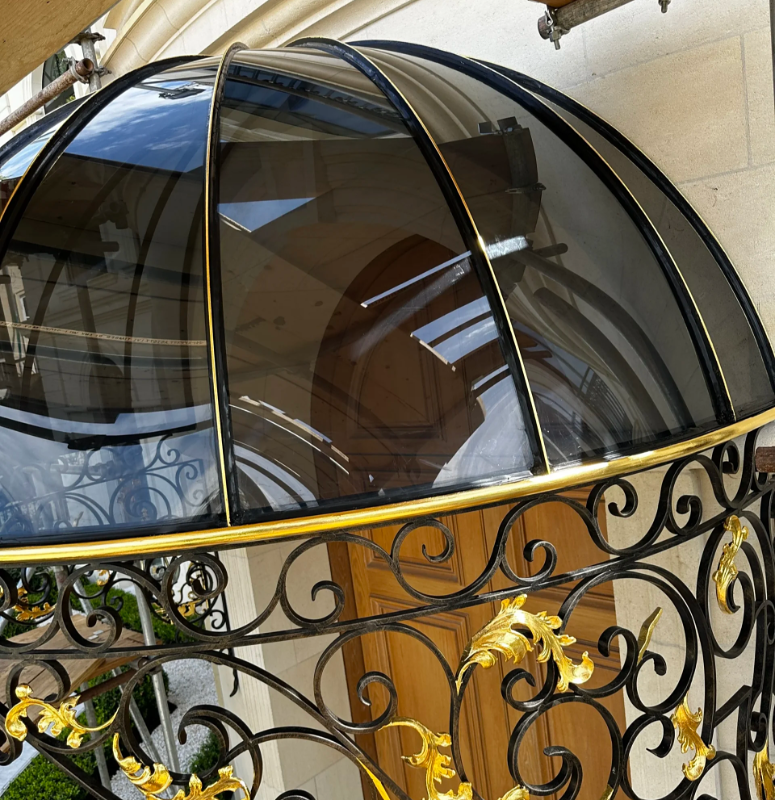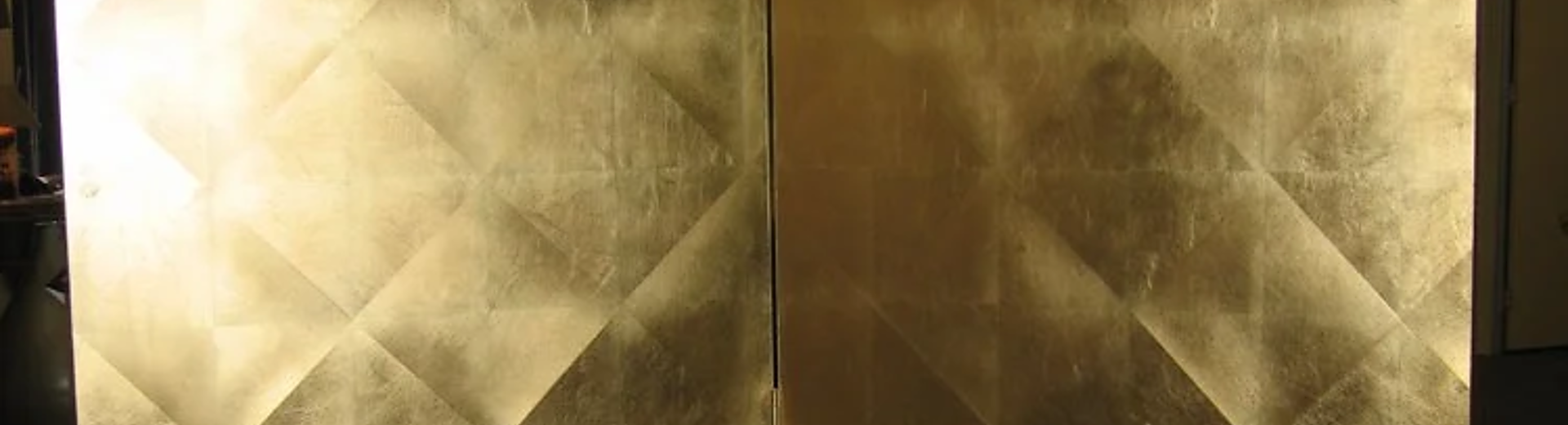
-
 35+ Years Experience
-
 Society of Gilders Member
-
 VCA
Postgraduate -
 International Clientele
Gold gilding is real gold. Sheets of it, hammered thin enough to lift in a draught, laid onto a prepared surface by hand and pressed home. I am Marcus Walkley, and gold has been my working material for 36 years: pure gold leaf on the Pope’s Liturgical Furniture, 10 months of gold foil in the State Theatre at Arts Centre Melbourne. Of the metals I gild with, this is the only one that does not change. Silver tarnishes and copper never stops moving. Gold stays as it was laid, and most of what follows here comes back to that.
What gold gilding is, and whether it is real gold
It is real gold. Genuine gold leaf is metallic gold, beaten out until a very small quantity covers a very large area. That is why anyone can afford it on a wall, and why a gilded ceiling is not costed like the bullion it started as.
The words move around, so here is how I use them. Gilding is the trade: metal leaf laid onto a surface. Gold leaf gilding is that trade done in gold, and gold leafing is the same thing said a different way. Gold foil is not.
Leaf and foil are two materials, and I do not use the words interchangeably, because the people who commission this work include architects and conservators who will notice. The Pope’s Liturgical Furniture took pure gold leaf. The State Theatre at Arts Centre Melbourne took gold foil. If a specification names one of them it should mean it, and if you are not sure which your own job wants, that is a fair thing to arrive without.
There is no machine for any of it. The leaf is hand applied, sheet after sheet, and how long a surface takes has more to do with its shape than its size: a flat panel closes quickly, and carved detailing does not. Gold leaf decoration is one of the oldest surface trades there is, and the decorative work I lay today goes down much the way it always has.
Gold does not tarnish, and that decides where it belongs
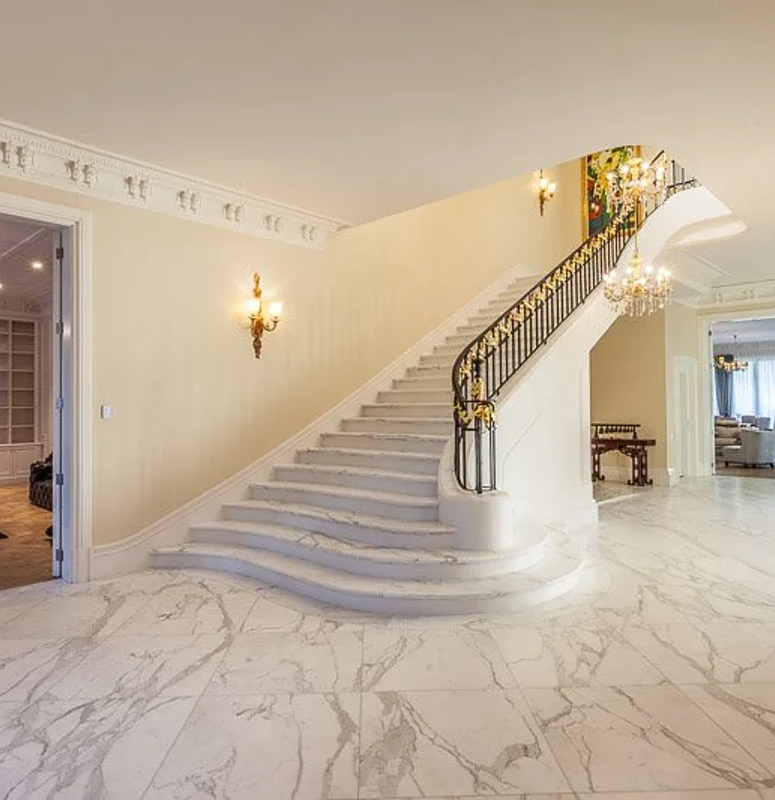
Gold does not tarnish and it does not corrode. Left alone it holds its colour and its lustre, and it will do that on a ceiling, on a gate or on an altar rail with nobody going near it. Nothing else on my bench can say the same. Silver darkens. Copper patinates and then keeps patinating. Both can be sealed, which slows the change without stopping it.
So gold is the honest specification for anything that lives outside. Weather is the shortest test there is, and a metal that shifts indoors will shift faster in the open air.
Indoors, the same reasoning applies wherever getting back to the surface is expensive. A gold leaf ceiling three storeys above a lobby floor, a dome, a hotel that trades every night of the year: on all of these the cost of the metal is small beside the cost of the access. The leaf that will not need doing again is the cheap one. The luxury gold finishes that last longest tend to be the ones nobody can reach.
It also changes what can be done years afterwards. Because the metal itself has not moved, new gold can be matched into old gold and settled down beside it. What has to be matched is the dust and the handling the room has put on the surface, not the gold. Do that on silver and you are matching to something that has been changing since the day it went on.
Gold surfaces do fail, and when one does the gold is rarely the culprit. What gives way is under it: a substrate on the move, water finding a way in, or a ground that was never sound to begin with. So I want to know what the surface is long before I will say anything about the finish.
Water gilding and oil gilding, and what each one suits
This is the question I am asked more than any other, and the answer is not a preference. It belongs to your surface.
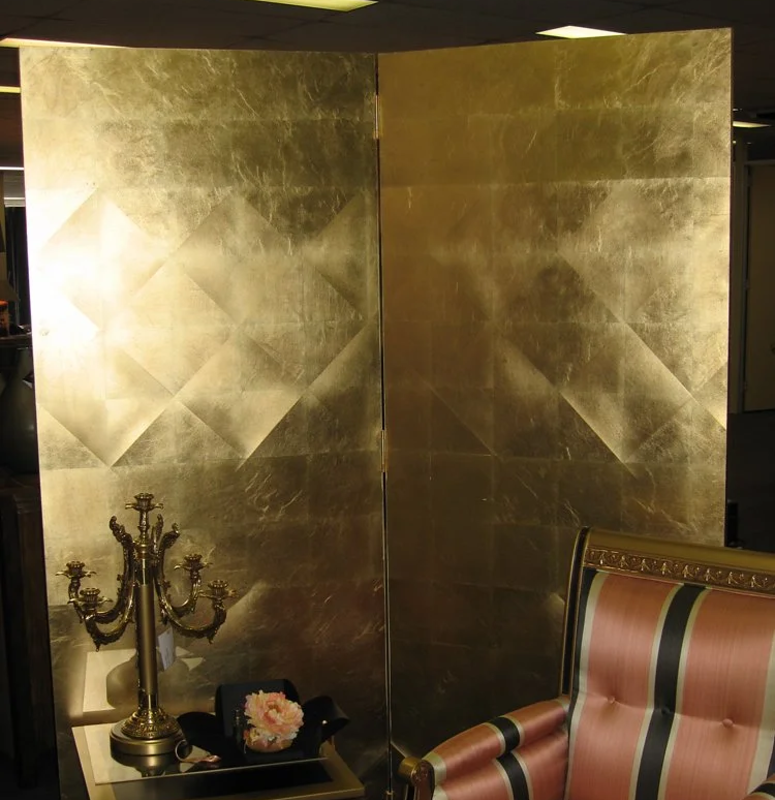
Water gilding is the older of the two and the least forgiving. The leaf goes down onto a prepared ground with water rather than an oil adhesive, and once it is dry it can be burnished to a hard, bright shine no other method reaches. It suits frames, mirrors, sculpture, liturgical furniture and fine interior work where the gold is meant to read as polished metal rather than as a coating. It is slow, and it is the part of the craft that takes longest to learn. The water gilded gold antique mirrors I have restored taught me more about it than anything else I have done.
Oil gilding lays the leaf onto an oil-based size, which is the trade’s word for the adhesive. It is tougher, it tolerates movement and weather, and it will not take a burnish, so it gives an even lustre instead of a mirror. That makes it the method for ceilings, walls, long architectural runs and anything left open to the sky. The application is the same either way, in that the leaf is still laid by hand. What differs is what it is laid into, and what can be done to it after.
Gold leaf restoration follows whichever method laid the original. Repair a water gilded frame in oil and the patch will announce itself, however good the leaf is. On new work the decision runs the other way round: tell me where the surface is and what it has to survive, and the method chooses itself.
The gold that has passed through Walkley Art
For 36 years the work has gone out under my own name, and Walkley Art is that name. Gold has been at the centre of it from the start. The bench is in Elwood; the job happens wherever the surface already is, around Melbourne, across Australia and overseas.
One commission alone came to 1,350 square metres of gold foil contemporary commercial ceilings for ARM and Heritage Australia. Across the career the contemporary commercial ceilings come to more than 11,000 square metres. There is a good deal of the work in my gilding portfolio.
Gilding is an artisan trade in the literal sense, learned at somebody else’s bench. Mine was Jennifer Bennell’s, at the Studio of Painted Finishes in Sydney, where I did my specialist training. Before that came a Diploma of Fine Art at Prahran Technical College and postgraduate study in Fine Art at the Victorian College of the Arts, and I am a member of the Society of Gilders. The gold I lay is premium leaf sourced globally, I guarantee no child labour in its production, and guarantees and warranties cover both materials and workmanship.
Riggo Borg, Director of Colour Earth Wrought Iron, put it more briefly than I have managed anywhere on this page: “Walkleyart’s gold gilding is absolutely stunning”. Others have put it at more length on my testimonials page.
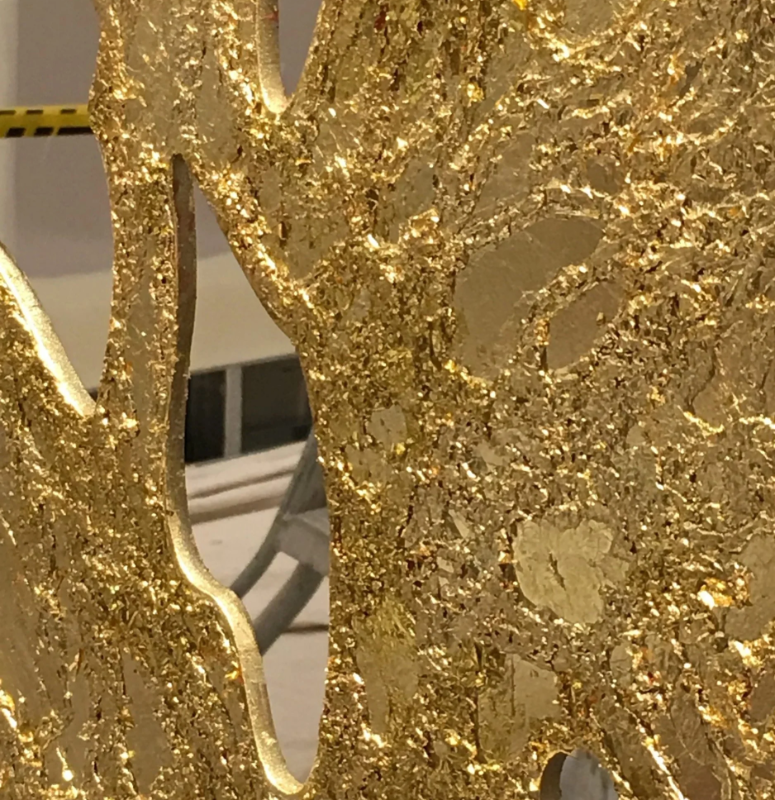
Before I can quote a gold job
Three answers get you a useful reply. What the surface is made of, and what condition it is in. Where it lives, and in particular whether the weather gets to it. And whether anyone will be able to touch it, because a surface within reach asks a different question of the method than one nobody can get to.
The surface decides the method. Not the budget, and not what was done in the last house you saw it in. Every job is custom, which is a plain fact rather than a selling line: there is no standard gold surface, so there is no standard answer to hand you.
None of that has to be precise, and you do not need the trade’s own words for any of it. Send what you have to marcus@walkleyart.com, or phone +61 411 622 711 on a weekday. Both come to me and to nobody else.