-
 35+ Years Experience
-
 Society of Gilders Member
-
 VCA
Postgraduate -
 International Clientele
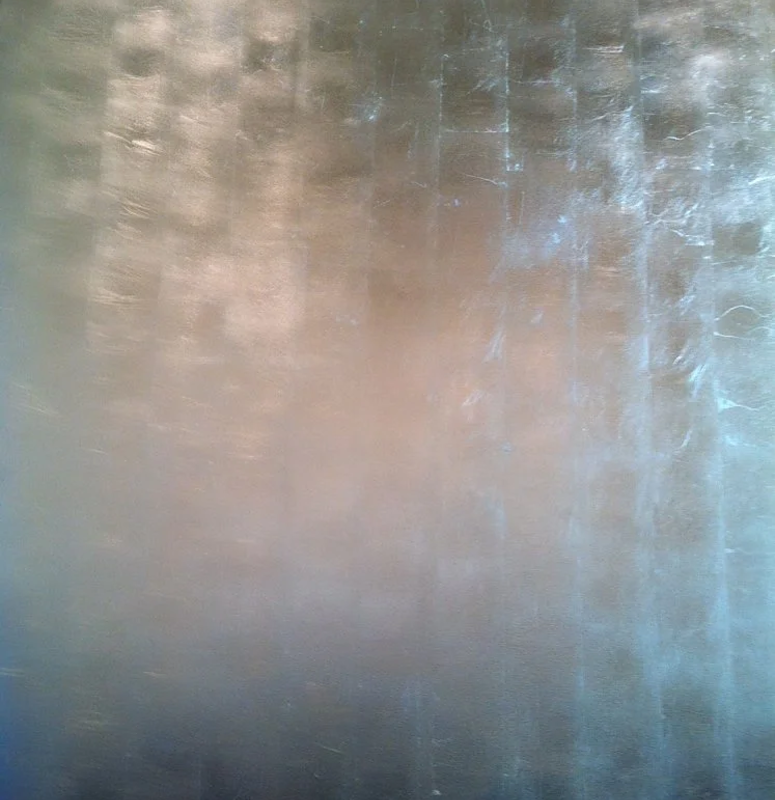
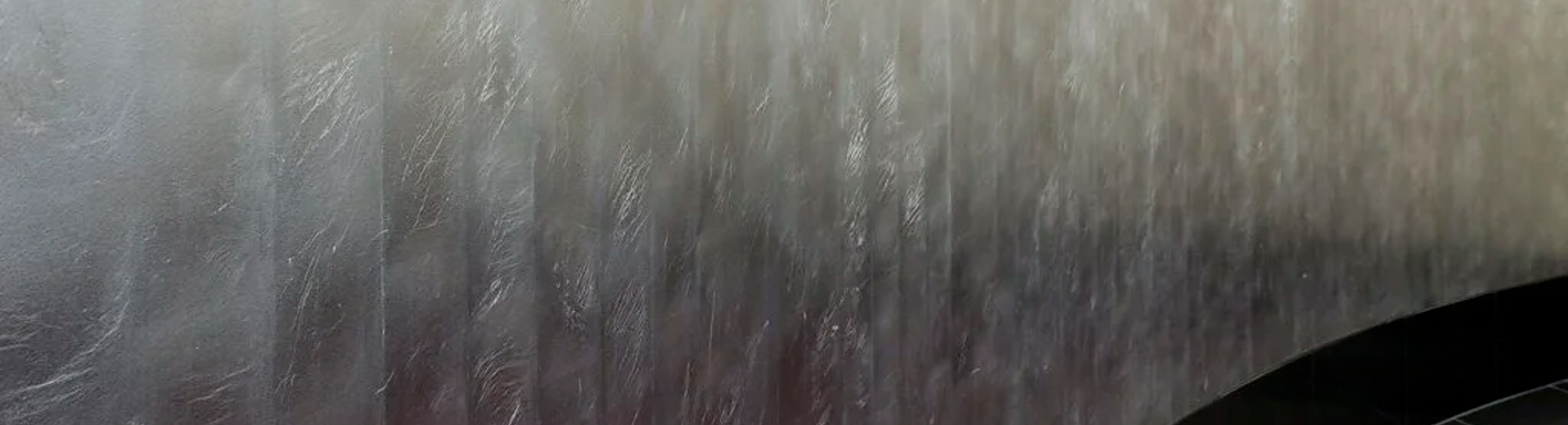
Silver does not have to read as silver. A coloured glaze laid over the leaf will warm it, cool it, or grey it down, and colour glazed silver gilding is one of the finishes I specialise in. The metal still reads as metal underneath; what moves is the tone. I am Marcus Walkley, and I have worked in gold, silver and copper leaf for 36 years. The leaf itself is the plain part of it. Genuine silver leaf, beaten thin, hand applied a sheet at a time onto a prepared surface. Nothing plated, nothing sprayed.
Glazing colour over silver leaf
A glaze is a translucent colour worked over finished leaf. Light still travels down to the metal and comes back up through the colour, so the surface keeps behaving like metal and never flattens into a plain colour. It shifts as you cross the room, and it shifts again as the day does.
The tone is what that buys you. Silver on its own is cool and bright, and not every room wants it at full brightness. Under a glaze the same surface can be taken warmer, pushed towards pewter, or knocked back until it sits quietly behind the furniture. Left almost clear, it gives up only the hardest edge of the reflection.
How far to go is judged standing in front of the surface, in the light the room actually has, against the joinery and the stone and the fittings that are already in place. It is not a colour you can choose in advance, and it is not one I will settle from a photograph. The custom silver leaf finishes I am asked for are one-offs by definition: the same brief, in two different rooms, does not give you the same surface.
Sealing is decided before the leaf goes down
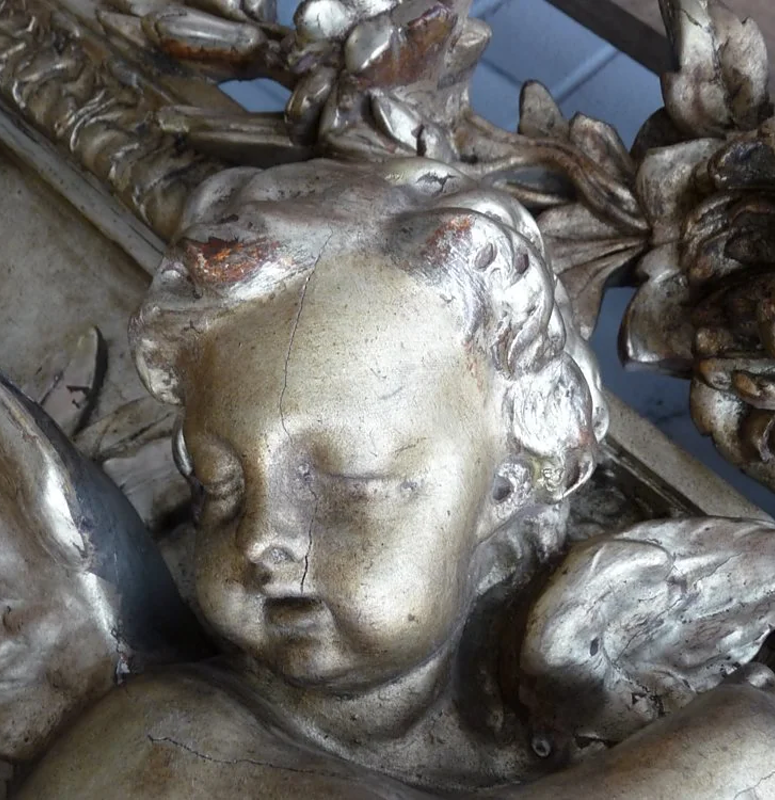
Silver tarnishes. That behaviour is part of what you are specifying, so it gets settled at the start of a job and not discovered at the end of one.
Is the surface sealed, or is it left open? The answer cannot wait until the leaf is on the wall, because whatever goes over metal leaf becomes part of the finish you end up looking at. The seal belongs in the same conversation as the glaze, since both sit on top of the silver and both change what you see.
Sometimes the honest answer is to leave it open and let the surface move. On the right piece the darkening is the finish: it reads as age, and age was the point. The decision just has to be made on purpose.
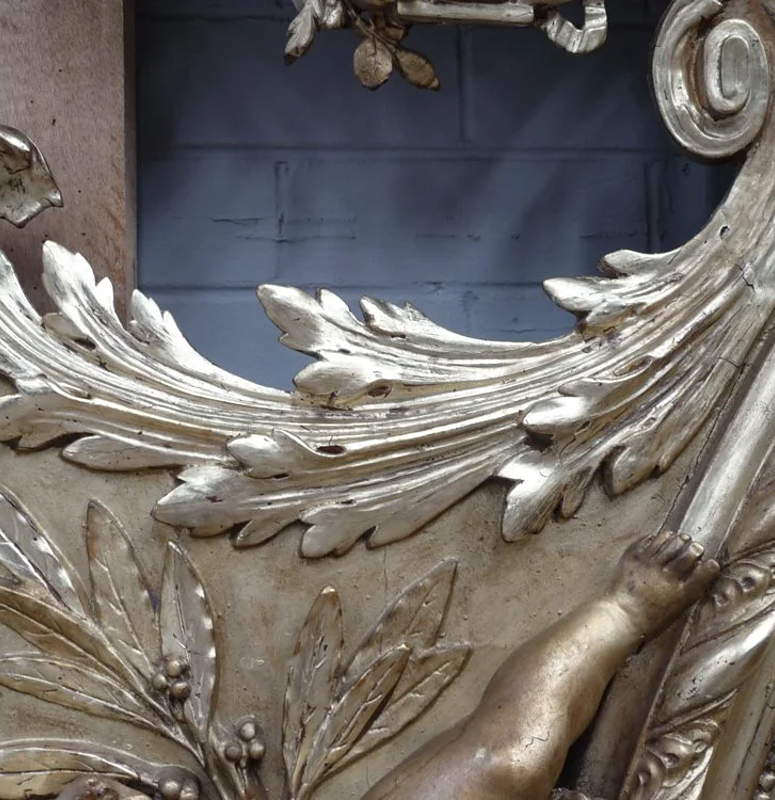
The surface also decides how the leaf is laid, and that in turn sets what a glaze can do afterwards. Ceilings, walls and long runs of joinery take oil gilding, where the silver leaf application goes down into an oil size and stays unburnished. Frames, mirrors and sculpture are where water gilding earns its place, laid over a prepared ground and burnished up hard and bright. Traditional silver leaf worked that way is the slowest thing on my bench and the least forgiving.
The same question opens any silver leaf restoration. A surface that has darkened with age gets read before it is touched: whether the darkness has become part of what the piece is, or whether the room wants the brightness back.
Which rooms take silver well
Rooms that run cool. Grey and off-white walls, dark stained joinery, pale stone, chrome, glass: silver settles into all of it, where gold in the same room would pull everything warm.
A silver leaf ceiling is the clearest case for it. It lifts the light without adding a colour to the room, which is what you want above a dining room, a bar, or a lobby whose palette is already doing the work below. Contemporary schemes take to it readily, and the luxury silver finishes that go into hotels and boutiques are usually there for the reflection alone.
Below the ceiling, most of it is decorative silver leaf on the things you notice one at a time. Feature walls and panels, joinery, cornices and mouldings, doors, and silver leaf detailing on smaller elements where the metal is the whole point of the object. Silver decorative finishes hold up especially well against dark timber, where the contrast does the work for them.
There is gold, silver and copper work throughout my gilding portfolio. Silver also does things over raw linen that it will not do on a wall. Those pieces sit in the artworks portfolio, where I lay gold and silver leaf with resins and acrylics worked between the layers.
Silver at Walkley Art, and where the leaf comes from
Walkley Art is one gilder, and has been for 36 years. Silver leaf gilding has been on the bench that whole time alongside gold and copper, so the choice between the three gets settled by what a room needs.
The leaf is genuine silver, premium material bought from suppliers around the world, and I guarantee no child labour anywhere in its production. Guarantees and warranties cover the materials and the workmanship both.
Where the craft came from: a Diploma of Fine Art at Prahran Technical College, then postgraduate study in Fine Art at the Victorian College of the Arts. The gilding itself came out of specialist training with Jennifer Bennell at the Studio of Painted Finishes in Sydney. I am a member of the Society of Gilders, and I teach the craft to beginners and to practising artists through my gilding classes.
No part of this has been mechanised. An artisan lays silver leaf a sheet at a time, and that holds whether the surface is a mirror frame or a ceiling three storeys up. My studio is at 143 Brighton Road, Elwood, and I travel to the surface: around Melbourne, across Australia, and further where a project calls for it. What clients made of the work is on my testimonials page.
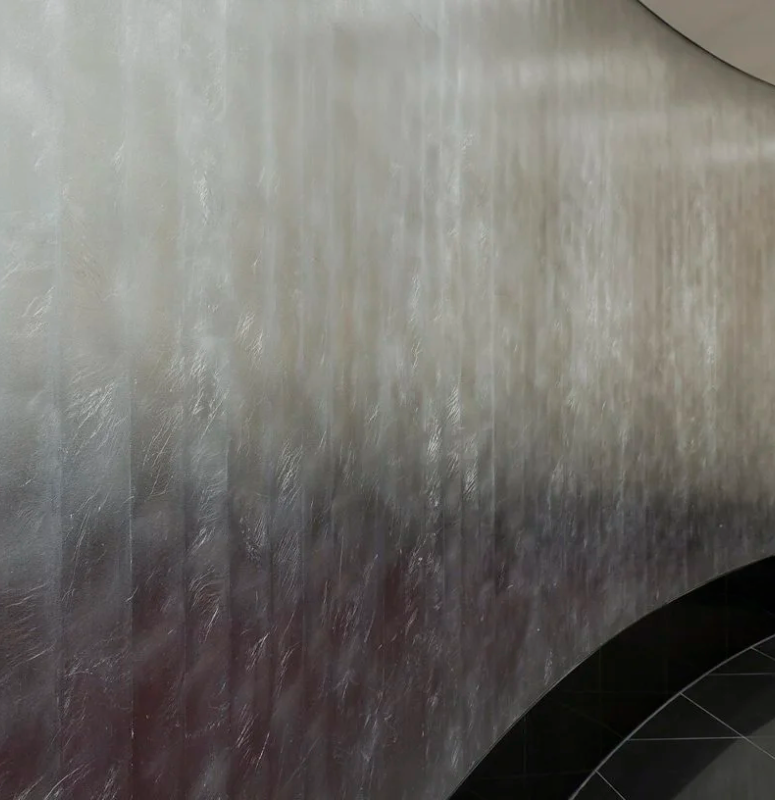
Start with the room the silver has to live in
Nobody commissions silver because it is silver. They commission it for a temperature they want a room to hold, and on this work that temperature is set by the glaze and the seal as much as by the metal under them.
So the message that helps me most is not about the finish at all. What the silver will sit beside, what light reaches it, and whether the room gets used by daylight or after dark. Custom silver gilding starts at those three answers and works back to the leaf, never the other way round.
If the room is easier to describe out loud, +61 411 622 711 during the week. If it is easier written down, marcus@walkleyart.com.